
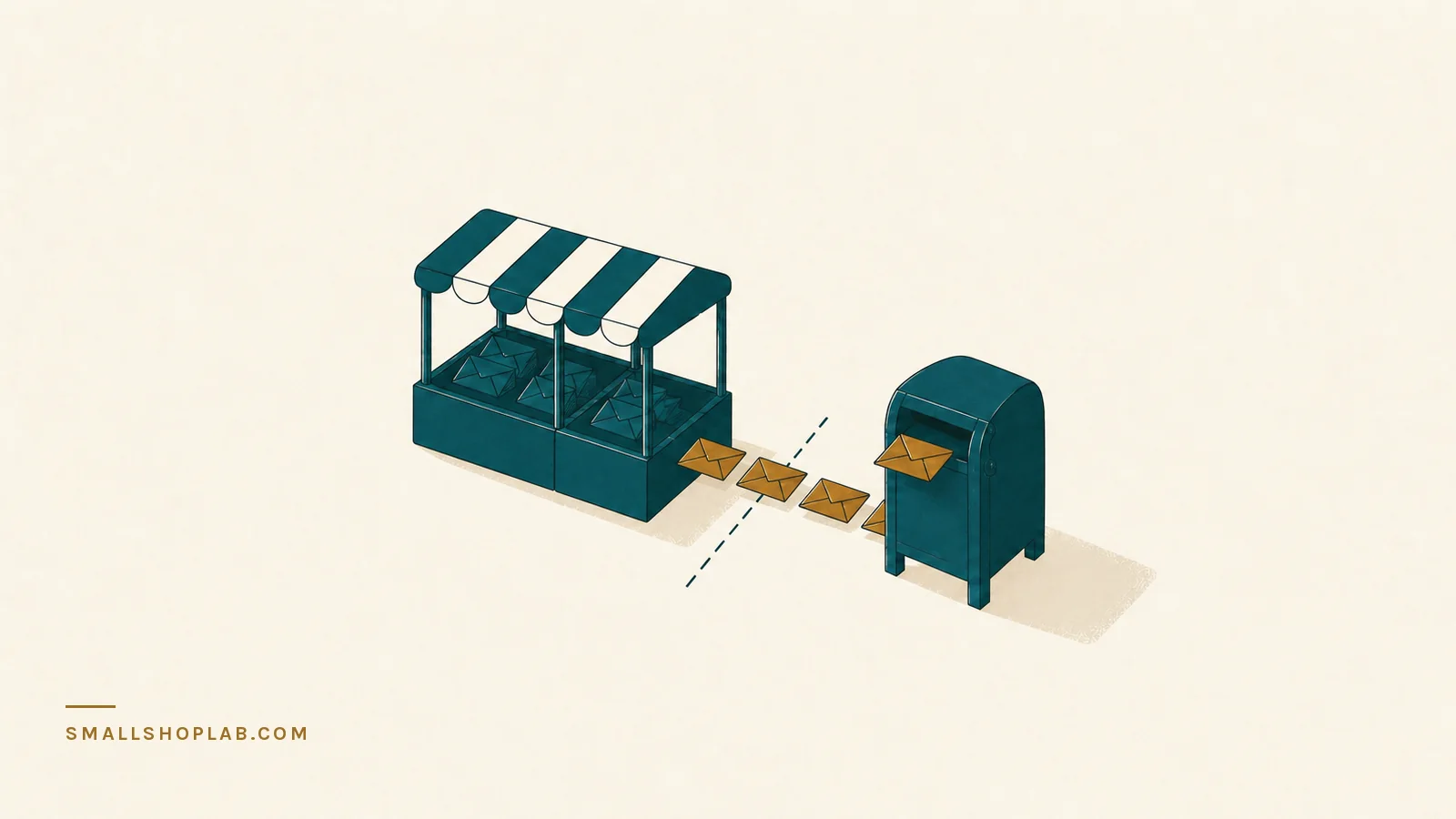
Over three years I spent ৳130,477 — about $1,064 — on Facebook ads for my jewelry shop, and 77.5% of it went on buying page followers. I got 76,294 of them, real people in my real market. Then I learned the thing every marketplace seller eventually learns: an audience you rent is not an audience you have.
Where these numbers come from
My own Meta ads account, read directly on 4 September 2026 with the date range set to Maximum — August 2023 to September 2026, 19 campaigns. Converted at 122.63 BDT to the dollar, the rate on 3 September 2026. The full story of that spend is in I bought 76,294 real followers for my jewelry shop; this post is about what I should have been building instead.
| Spend | What it bought | |
|---|---|---|
| Followers campaign | ৳101,098 ($824) | 76,294 page follows at ৳1.33 (about one US cent) each |
| Sales campaign | ৳1,853 ($15) | 22 adds-to-cart at ৳84.21 ($0.69) each |
| Everything else | ৳27,526 ($224) | 17 other campaigns, including one that sat switched on for nearly three years with an error, delivering nothing |
The part that makes this an email post
Here is what I did not understand at the time. Those 76,294 people are not mine. They are Facebook’s. When I post, Facebook decides how many of them see it, and the answer for an ordinary page post is a small single-digit percentage. I paid a cent each for permission to apply to reach them later.
Etsy is the same arrangement wearing a different outfit. The buyer who just paid you is Etsy’s customer, on Etsy’s terms, reachable through Etsy’s messaging system for Etsy’s permitted reasons. You did the work. Etsy keeps the relationship.
A page follow cost me ৳1.33. An add-to-cart from the campaign built to sell cost me ৳84.21 — sixty-three times more. I spent three years buying the cheap number because it was the one that went up.
An email address does not have that problem. Nobody decides whether your email is shown. There is no algorithm between you and the inbox, no reach percentage, no policy change that halves your audience on a Tuesday. It is the only audience in this entire business that you actually own.
What Etsy actually allows
This is where most advice goes vague, so let me be exact about the shape of it. Etsy gives you the buyer’s email for order-related communication. It does not give you permission to add them to a marketing list without their consent, and scraping order emails into a newsletter is a policy problem, not a growth hack.
What is permitted, and what actually works, is asking — with something worth the exchange, in a place the buyer is already looking.
Four places to ask, in order of how well they work
- A card in the parcel. The single best one, and almost nobody does it properly. The buyer is holding the thing they bought and feeling good about it — that is the highest-trust moment in the entire relationship, and it happens off-platform. A short URL and one honest sentence about what they will get.
- Your own site, even a one-page one. A marketplace listing cannot host a signup form. A page you own can, and it costs less a month than one day of the ad spend in the table above.
- The shop announcement and About section. Low conversion, zero cost, and it reaches people who are researching you rather than buying today — which is exactly who a list is for.
- Anywhere you already have an audience you rent. Followers, subscribers, group members. Convert the rented audience into an owned one. That is the move I did not make for three years.
What to offer, and what not to
| Offer | What it actually does |
|---|---|
| “First look at new pieces before they go live” | Costs nothing, is true for a one-of-a-kind shop, and attracts buyers rather than discount hunters |
| A care guide for what they just bought | Genuinely useful, and it arrives when they care most |
| “I email once a month and that is all” | The main objection is volume, so answer it before it is raised |
| A 10% discount code | Works, and teaches the list to wait for discounts. Use it if your margin allows — mine does not |
That last row is the whole reason I care about this. My net per delivered order is about 2.2%. I cannot buy list growth with discounts, so it has to be earned with something that costs me nothing but attention.
Three things to do with this
- Put a card in the next parcel you send. Not a redesign, not a campaign — one card, one URL, one sentence. You will learn more from ten parcels than from a month of planning.
- Work out what a subscriber is worth to you before you pay for one. Take your net per delivered order, multiply by how many times a year a customer buys. If that number is small, your list has to be earned rather than bought — which is fine, and cheaper.
- Audit anything you are currently paying to rent. One of my campaigns ran for nearly three years with an error, delivering nothing, because nobody ever opened it. Rented audiences fail quietly. Owned ones do not.
Ad figures read from my own Meta Ads Manager on 4 September 2026, date range Maximum. Converted at 122.63 BDT to the dollar, the rate on 3 September 2026.
Questions people ask about this
Can I email my Etsy customers?
For order-related messages, yes — that is what the address is for. Adding buyers to a marketing list without their consent is a different thing, and it is a policy and privacy problem in most jurisdictions regardless of what the platform allows. Ask, do not assume.
How many subscribers do I need before it is worth it?
The threshold is lower than people think, because an owned list is not competing for reach. A hundred people who asked to hear from you will do more than tens of thousands of followers on a platform that shows your post to a fraction of them — I have the receipt for the second half of that sentence.
Is a discount code the fastest way to grow a list?
It is the fastest, and it selects for people who want discounts. Whether that is a problem depends entirely on your margin. Work out what the discount costs as a share of your net profit per order before deciding — for a lot of handmade shops it is most of it.
What should I actually send?
The thing you promised, at the frequency you promised. For a one-of-a-kind shop, first sight of new pieces is genuinely valuable and costs nothing to give. The failure mode is not sending boring emails — it is going quiet for four months and then sending a sale.
Leave a Reply